
Transatlantic Relations at a Crossroads
 30.01.2026


 30.01.2026
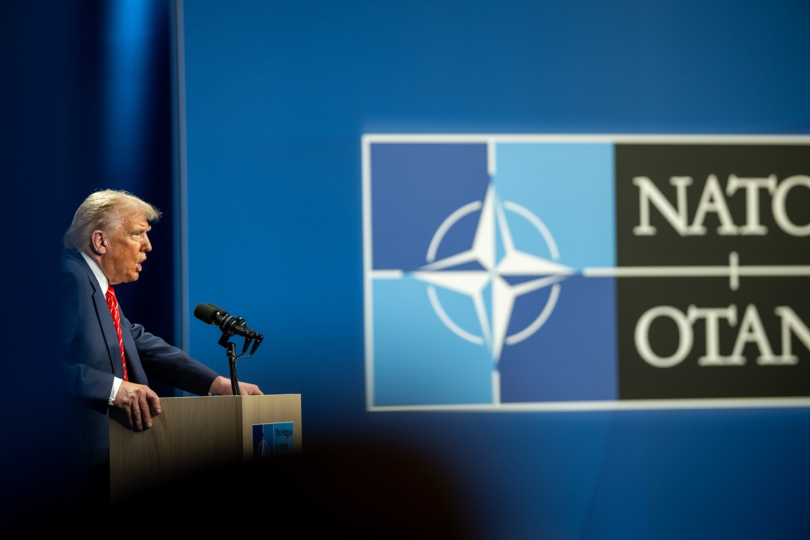
One of the most unpredictable and tense times for the transatlantic relationship since the conclusion of the Cold War is about to begin. In the face of evolving global power dynamics, mounting geopolitical challenges, and growing strategic difference between Washington and European capitals, long-held beliefs about U.S. leadership, European security dependency, and NATO's longevity are being called into doubt.
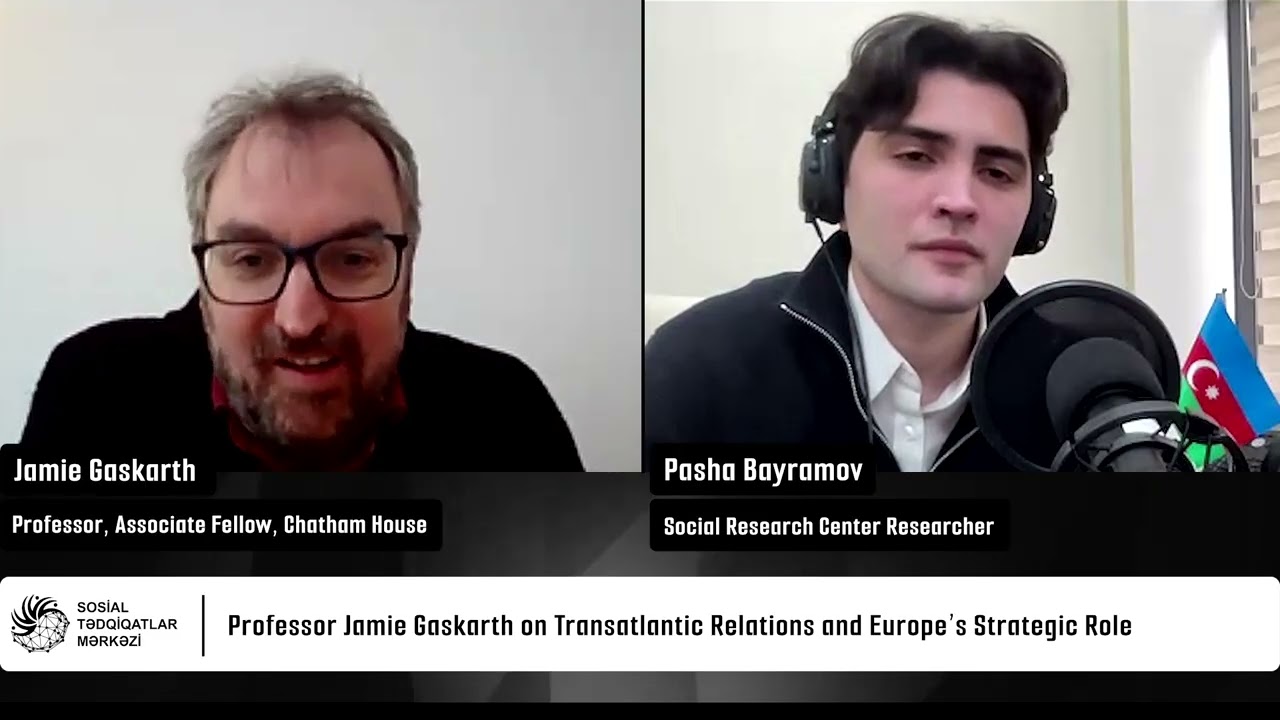
A recent edition of the Social Research Center of Azerbaijan's podcast Global Bridges, which features Professor Jamie Gaskarth, Associate Fellow at Chatham House and a professor of foreign policy and international relations, focused on these subjects. The conversation gave a forthright assessment of the current condition of U.S.–Europe ties, Europe’s pursuit of strategic autonomy, the altering security environment, and the long-term prospects of the transatlantic partnership.
A Relationship Under Strain
Professor Gaskarth said that contemporary tensions did not appear suddenly when considering the course of U.S.-Europe ties during the previous ten years. He pointed out that over the past few decades, the US and Europe have been "drifting apart a little bit," especially as Washington has been more preoccupied with Asia and the perceived threat posed by China. The United States gradually reduced its focus and resources on Europe as part of this geopolitical reorientation, which is also referred to as the "pivot to Asia."
But the current phase, in Gaskarth's opinion, is a much more significant breach. He called the situation "the biggest crisis since Suez in 1956" and called the Trump administration's actions "unprecedented in how antagonistic relations have got between the U.S. and Europe."
He claimed that rhetoric that seems to mainstream the idea of coercion—even military force—against allies is especially dangerous. Gaskarth cautioned that such actions "fly in the face of the NATO North Atlantic Treaty," thus undermining the logic of NATO's collective defense. He noted that if "one NATO member is attacking another NATO member, it all gets very confusing about how you should respond to that," highlighting the confusion this causes over Article 5.
He emphasized that these changes have caused "very serious kind of fractures" inside NATO. He referenced the opinions of former high-ranking NATO officials, pointing out that people like General Sir Richard Shirreff have called the US "a greater threat to NATO than Vladimir Putin."
European Strategic Autonomy: Possibility and Paradox
The idea of strategic autonomy is one of the most important discussions influencing Europe's future security posture. Professor Gaskarth agreed that this goal is feasible, at least in theory. He pointed out that European defense budgets are now increasing in response to the Trump administration's repeated calls on European nations to boost defense spending.
From Washington's point of view, more European responsibility could be preferable since it would enable the US to lessen its physical presence in Europe and concentrate more on the Indo-Pacific. Yet Gaskarth noted that this argument has an inherent contradiction. Reduced American influence on European strategic thought would also result from a smaller U.S. presence.
He explained that U.S. leadership in Europe historically provided Washington with “a lot of influence and control over how Europe thought about its defense and security.” If Europe were to chart a genuinely independent course—particularly in areas such as relations with China—the consequences might be deeply uncomfortable for the United States. As Gaskarth put it, “you’d think the Trump administration would welcome European strategic autonomy, but it might not actually like the consequences.”
Internal European disagreements worsen the situation beyond transatlantic issues. The European Union is "fundamentally a civilian forum," according to Gaskarth, and many member states are still hesitant to turn it into a more overtly military actor. He noted that states like Hungary "don't see the Russia threat in the same way" as other EU members, highlighting the resistance of historically neutral nations like Ireland.
The United Kingdom and European Security After Brexit
The role of the United Kingdom complicates the security debate in Europe even further. The UK is still among Europe's most militarily powerful nations despite not being a member of the EU. Despite the UK's formal split from the EU, Professor Gaskarth emphasized that "it's very difficult to talk about European security without including the UK."
He cited recurring disagreements over EU defense purchase programs, such as substantial collective defense funding intended to increase European military power. He pointed out that the UK is still only marginally involved, with little access to contracts and no complete integration into these initiatives. Gaskarth claims that rather than a common strategic vision, opposition from some European defense industries—especially in France—reflects sectoral and national rivalry.
This fragmentation, he warned, undermines Europe’s ability to respond effectively to a less reliable U.S. security umbrella. Instead of focusing on collective capacity-building, European states often remain “grappling for their own self-interest rather than thinking of the larger bigger picture.”
Greenland, Risk-Taking, and Leadership Uncertainty
The contentious Greenland issue and the more general problem of military escalation among major nations were also discussed. In the past, Professor Gaskarth admitted, speculations of such eventualities would have been written off as unrealistic. However, he now contended that uncertainty itself had emerged as a key characteristic of global politics.
Gaskarth said that President Trump's previous remarks generated uncertainty before he later "emphasized that he wouldn't use military force," even as he emphasized that military action over Greenland remains "extremely unlikely." However, he also cited studies that indicate leaders may grow less risk-averse as they get older. He called this trend "slightly concerning" and pointed out that people in their seventies presently lead the world's main powers.
Looking Ahead: Climate, China, and Strategic Shock
Professor Gaskarth took a cautious stance when questioned about how U.S.-European relations will develop after 2026. He contended that underlying structural uncertainties are making long-standing predictions about a more perilous world come true.
He underlined that climate change will be crucial. Melting Arctic ice is creating new trade routes and raising security issues for Europe and the North Atlantic. Gaskarth cautioned that with increased Chinese and Russian activities in the North Atlantic and Arctic, areas that were previously thought to be reasonably stable could become more contested.
China’s potential actions toward Taiwan represent another major uncertainty. Gaskarth noted that if Beijing were to pursue military action, the U.S. response would be decisive for global stability. He outlined starkly different possible outcomes, ranging from “a major war between great powers” to a muted response that would fundamentally reshape the international order.
Combined with climate-driven migration, supply chain disruptions, and environmental stress, these factors, he concluded, make the future “more dangerous and more uncertain,” leaving him “less optimistic” about the trajectory of global politics.
Europe, China, and Signals to Washington
Europe's political and economic stance, especially with regard to China, was also discussed. Commenting on President Emmanuel Macron’s words at Davos about encouraging Chinese investment, Professor Gaskarth viewed the message as a subtle warning to Washington. He proposed that it would serve as a reminder to the US that "other markets are available" in the event that US policy turns "coercive and aggressive."
However, he also recognized Europe's limitations. The amount of interaction with Beijing is nevertheless constrained by liberal democratic norms, human rights concerns, and ongoing accusations of cyber espionage. Although many European nations may want "a warmer relationship with China," Gaskarth contended that these conflicts draw boundaries.
A Concrete Path Forward
Professor Gaskarth provided helpful suggestions for enhancing the transatlantic partnership as he wrapped up the conversation. He emphasized the critical necessity for Europe to build "real defense capabilities" and go beyond rhetoric. He cautioned against keeping "hollowed-out forces" that are still reliant on American assistance while depending on future promises.
His advice was more straightforward for the United States. He maintained that "quite concrete steps" toward reestablishing stability and trust would include cutting back on inflammatory speech and avoiding threatening partners.
The discussion brought to light a harsh fact: habit and history alone are no longer sufficient to sustain the transatlantic cooperation. The future of U.S.-European relations will depend on difficult decisions, credible capabilities, and a renewed commitment to collaboration in a more unpredictable world, as Professor Gaskarth's thesis made evident.
by Pasha Bayramov
Leading advisor SRC